Portfolio management has long been presented as a rational discipline. Projects are assessed, prioritised and funded based on strategic fit, capacity and risk. In theory, this creates alignment between intent and execution. In reality, most portfolios drift steadily away from the strategy they were meant to serve.
Traditional portfolio management is largely retrospective. Decisions are made using snapshots of information that are already out of date. Dependencies are understood in isolation. Risk is assessed at the point of approval and then revisited infrequently. The result is a portfolio that looks coherent on paper but behaves unpredictably in practice.
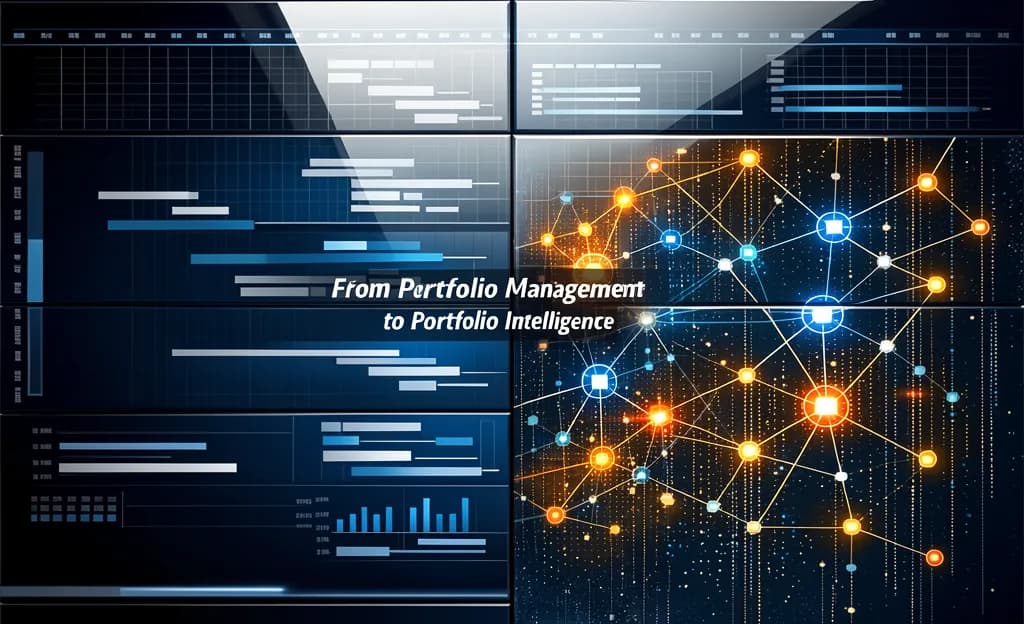
Portfolio intelligence takes a different approach. Rather than treating the portfolio as a static collection of initiatives, it treats it as a living system. Interactions between projects matter as much as individual performance. Small delays compound. Resource contention shifts priorities. Strategic intent erodes quietly as local decisions accumulate.
AI enables this systemic view by continuously observing how work actually flows. It highlights emerging bottlenecks, fragile dependencies and misaligned incentives long before they show up in formal reviews. This does not remove the need for human judgement, but it changes where that judgement is applied.
Instead of debating whether a project is on track, leaders can focus on whether the portfolio is behaving as intended. Instead of defending sunk costs, they can assess opportunity cost in near real time. The conversation moves from control to coherence.
This shift also challenges established governance structures. Annual portfolio cycles struggle to keep pace with dynamic insight. Funding models based on fixed commitments feel increasingly brittle. Organisations experimenting successfully with portfolio intelligence tend to favour incremental investment and frequent recalibration over grand resets.
At Nagrom, this evolution is often framed as a change in posture rather than process. Portfolio intelligence is less about optimisation and more about awareness. It gives leaders a clearer view of the consequences of their choices, without pretending that complexity can be fully mastered.
As delivery environments become more interconnected and fast-moving, the limits of traditional portfolio management become harder to ignore. Intelligence does not guarantee better decisions, but it makes the trade-offs visible. In an uncertain world, that visibility is what allows strategy to remain alive rather than aspirational.